

angled coil contact
An angled coil contact is a precision-engineered electrical component that facilitates robust signal and power transmission in connector assemblies, distinguished by its coiled spring structure oriented at an intentional angle relative to the contact’s central axis. Unlike straight coil contacts, which align parallel to the mating direction, the angled design introduces unique mechanical and electrical properties ideal for harsh or high-reliability applications. Typically fabricated from high-conductivity copper alloys—such as beryllium copper or phosphor bronze, chosen for their exceptional spring memory and corrosion resistance—the coil is often plated with gold, silver, or tin to minimize contact resistance and enhance durability. The angle of the coil windings (usually 10–30 degrees from the axial direction) is tailored to the application, balancing contact force distribution, misalignment tolerance, and mating ease. When mated with a complementary pin or socket, the angled coil compresses, and its tilted windings create a multi-point contact interface. This distributed contact ensures current flows through multiple parallel paths, boosting current-carrying capacity while reducing the risk of intermittent connections caused by wear, contamination, or minor surface imperfections. The spring’s inherent elasticity provides a consistent normal force over thousands of mating cycles, maintaining reliability even after repeated use. Key advantages include exceptional reliability: multi-point contact mitigates single-point failures, a critical feature in safety-critical systems. They exhibit remarkable durability, often supporting 10,000+ mating cycles without significant performance degradation. Their angled structure tolerates radial and axial misalignment—essential in environments like automotive engine bays or aerospace avionics, where vibration, thermal expansion, or mechanical shifts disrupt alignment. Additionally, their vibration resistance (absorbing shocks to prevent loosening) and low contact resistance (typically below 10 milliohms) make them suitable for power-intensive or high-signal-integrity applications. These contacts are ubiquitous in industries demanding uncompromising performance. In automotive systems, they power engine control units, sensor connectors, and infotainment modules, withstanding extreme temperatures (-40°C to 150°C) and constant vibration. In aerospace, they are used in avionics and satellite components, where failure is not an option. Industrial robotics rely on them for precise signal transmission in moving joints, while medical devices use them in sterile, high-cycle connectors for diagnostic equipment. Even consumer electronics, like high-end audio interfaces, leverage their low noise and reliable connection for premium performance. As engineering requirements grow more stringent—demanding higher reliability, longer lifespans, and tolerance to harsh conditions—angled coil contacts remain a preferred choice for designers. Their unique blend of mechanical resilience and electrical efficiency makes them a cornerstone of modern connector technology, enabling the seamless operation of devices that power daily life and critical industries.
Products
Category:
-
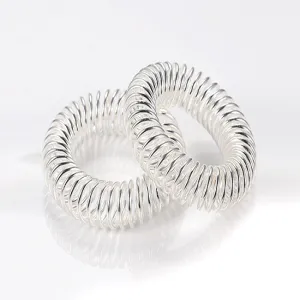
Precision Canted Coil Spring Contact Element
Category: Canted Coil SpringBrowse number: 5Number:Release time: 2025-12-31 10:40:31The Precision Canted Coil Spring is a highly engineered contact element designed to deliver dependable mechanical compliance and stable electrical performance in complex connection environments. By utilizing inclined coil geometry, this spring achieves controlled deflection behavior that remains consistent throughout its working range.
News
Category:
No search results found!
Case
Category:
No search results found!
Video
Category:
No search results found!
Download
Category:
No search results found!
Job
Category:
No search results found!
Featured Products
-
NEWS
Precision Canted Coil Spring Contact Element
Learn more



 Phone
Phone