

PCB board to board connector
PCB Board-to-Board Connectors: Overview and Key Considerations Board-to-board (BTB) connectors are essential components in electronic design, enabling direct electrical connections between printed circuit boards (PCBs) without the need for cables. These connectors are widely used in applications such as consumer electronics, industrial equipment, automotive systems, and telecommunications devices, where space efficiency, reliability, and signal integrity are critical. Types of Board-to-Board Connectors 1. Mezzanine Connectors – These connectors stack PCBs parallel to each other, providing a compact solution for high-density designs. They are commonly used in memory modules and embedded systems. 2. Stacked Connectors – Similar to mezzanine connectors but with a vertical offset, allowing for different PCB heights. 3. Coplanar Connectors – These connect PCBs edge-to-edge in the same plane, often used in modular systems or expandable devices. 4. Pin Header and Socket Connectors – A simple and cost-effective solution, consisting of male pin headers and female sockets, widely used in prototyping and low-complexity applications. Key Features and Selection Criteria - Pitch Size – The distance between adjacent contacts, typically ranging from 0.4mm to 2.54mm. Smaller pitches allow higher density but require precise manufacturing. - Current Rating and Voltage – Determines power handling capability; high-power applications may require connectors with robust contacts. - Mating Cycles – The number of connect/disconnect operations a connector can endure before degradation. Industrial-grade connectors often support thousands of cycles. - Mechanical Stability – Features like locking mechanisms or rugged housings prevent disconnection due to vibration or shock. - Signal Integrity – High-speed applications (e.g., PCIe, DDR) require connectors with controlled impedance and shielding to minimize crosstalk and EMI. Applications and Trends Board-to-board connectors are crucial in miniaturized electronics, such as smartphones, wearables, and IoT devices, where space constraints demand slim, high-density solutions. The rise of 5G and high-performance computing has also driven demand for connectors capable of supporting faster data rates (e.g., 10+ Gbps). Conclusion Selecting the right board-to-board connector involves balancing factors like pitch, current capacity, durability, and signal performance. As electronics continue to shrink in size while increasing in complexity, advanced connector designs will play a vital role in enabling next-generation devices.
Products
Category:
Canted Coil Spring
-
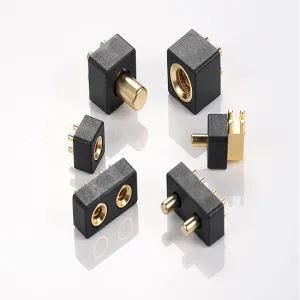
Board-to-Board Connectors for High-Density Interconnection Solutions
Category: Board-to-Board ConnectorsBrowse number: 4Number:Release time: 2025-12-29 11:15:26Board-to-board connectors are essential components used to create stable electrical and mechanical connections between two printed circuit boards (PCBs). At YFS Technology (SZ) Co., Ltd, board-to-board connectors are developed as a core part of complete connector solutions, designed to meet the growing demand for compact design, high signal integrity, and reliable long-term performance.
News
Category:
-
[Company News]Contact Heating and Lifetime Degradation of Spring-Loaded Co...
2025-12-30 10:42:40 -
[industry news]Custom Spring-Loaded Contacts for Reliable Electrical Connec...
2025-12-31 09:04:18 -
[industry news]M12 Connectors Explained: A, B, D and X Coding Differences
2026-01-01 09:11:43 -
[Company News]Environmental Sealing Performance of M12 Connectors in Harsh...
2026-01-01 09:12:23 -
[Company News]Production and Inspection Process of Spring-Loaded Contacts
2026-01-02 09:04:33 -
[industry news]How Push-Pull Connectors Improve Reliability in Medical Devi...
2026-01-04 09:10:32
Case
Category:

Video
Category:
No search results found!
Download
Category:
No search results found!
Job
Category:
No search results found!
Featured Products
-
NEWS
Board-to-Board Connectors for High-Density Interconnection Solutions
Learn more



 Phone
Phone