

PCB interconnection connectors
PCB Interconnection Connectors: Types, Applications, and Key Considerations Printed Circuit Board (PCB) interconnection connectors are essential components in electronic systems, enabling reliable electrical connections between PCBs, cables, or other devices. They play a critical role in signal integrity, power delivery, and mechanical stability across various industries, including consumer electronics, automotive, industrial automation, and telecommunications. Types of PCB Connectors 1. Board-to-Board Connectors - These connectors link PCBs directly, either in parallel (mezzanine) or perpendicular (right-angle) configurations. They are commonly used in compact devices like smartphones and IoT modules. 2. Wire-to-Board Connectors - These connect wires or cables to PCBs, facilitating power and signal transmission. Examples include crimp, IDC (Insulation Displacement Connector), and screw terminal connectors. 3. Cable-to-Cable Connectors - Used to join cables, these connectors ensure flexibility in system design, such as in modular industrial equipment. 4. Backplane Connectors - High-speed, high-density connectors for server and networking applications, supporting data transfer between multiple PCBs in a chassis. 5. FFC/FPC Connectors - Designed for flexible flat cables (FFC) or flexible printed circuits (FPC), these are widely used in displays and portable electronics. Key Considerations for Selection - Current and Voltage Ratings: Must match the application’s power requirements. - Pitch Size: Smaller pitches (e.g., 0.5mm) enable high-density layouts, while larger pitches (e.g., 2.54mm) simplify assembly. - Durability: Connectors should withstand mating cycles, vibrations, and environmental factors like moisture or temperature extremes. - Signal Integrity: High-frequency applications require connectors with shielding and controlled impedance. - Ease of Assembly: Features like snap-fit or push-pull locking mechanisms improve manufacturability. Applications - Consumer Electronics: Connectors enable modular designs in laptops, wearables, and smart home devices. - Automotive: Harsh-environment connectors ensure reliability in infotainment and ADAS systems. - Industrial: Ruggedized connectors support machinery and automation systems. - Medical: Miniature, high-reliability connectors are critical for diagnostic and monitoring equipment. Future Trends Advancements in miniaturization, high-speed data transfer (e.g., USB4, PCIe Gen5), and materials (e.g., high-temperature plastics) are driving connector innovation. Additionally, the rise of IoT and 5G demands connectors that balance performance, size, and cost. In summary, PCB interconnection connectors are vital for modern electronics, and selecting the right type requires careful consideration of electrical, mechanical, and environmental factors.
Products
Category:
-
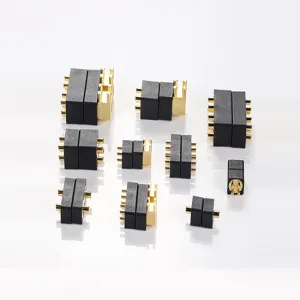
Board-to-Board Connectors for Reliable PCB Interconnection
Category: Board-to-Board ConnectorsBrowse number: 26Number:Release time: 2025-12-24 14:14:29Board-to-Board Connectors are essential components used to create stable and compact electrical connections between printed circuit boards (PCBs). As electronic devices continue to move toward higher integration, smaller form factors, and higher signal density, board-to-board interconnection has become a critical part of overall system design.
News
Category:
-
[industry news]Crosstalk and Shielding Strategies of RF / FAKRA Connectors...
2025-12-30 10:47:42 -
[industry news]Applications of Spring-Loaded Contacts in Testing and Modula...
2025-12-31 09:05:39 -
[industry news]Fine Pitch Board-to-Board Connectors: Challenges and Solutio...
2026-01-03 09:00:39
Case
Category:

Video
Category:
No search results found!
Download
Category:
No search results found!
Job
Category:
No search results found!
Featured Products
-
NEWS
Board-to-Board Connectors for Reliable PCB Interconnection
Learn more



 Phone
Phone