

board interface pin header
A board interface pin header is a fundamental electronic component used to establish connections between printed circuit boards (PCBs), modules, or peripheral devices. It consists of a series of metal pins arranged in a single or double row, housed within a plastic or nylon insulator. Pin headers are widely employed in prototyping, embedded systems, and consumer electronics due to their simplicity, reliability, and ease of use. Structure and Design Pin headers are available in various configurations, including single-row (1xN) and double-row (2xN) layouts, where "N" denotes the number of pins. Common pin spacings (pitches) include 2.54 mm (0.1 inches), 2.00 mm, and 1.27 mm, with 2.54 mm being the most widely used. The pins are typically made of phosphor bronze or brass, plated with gold or tin to enhance conductivity and corrosion resistance. The insulator material provides mechanical stability and electrical isolation between pins. Types of Pin Headers 1. Male Pin Headers (Straight or Right-Angle): These feature protruding pins that insert into female sockets or solder directly onto a PCB. Right-angle versions allow horizontal connections, saving space in compact designs. 2. Female Pin Headers (Receptacles): These accept male pins and are often used in cable assemblies or as board-to-board connectors. 3. Stackable Pin Headers: Designed for modular systems, they allow multiple boards to be connected in a vertical stack. 4. Shrouded Pin Headers: Include a plastic guide to prevent misalignment, commonly seen in industrial and high-reliability applications. Applications - Prototyping & Breadboarding: Pin headers enable quick connections between development boards (e.g., Arduino, Raspberry Pi) and peripheral modules. - PCB Interconnects: They facilitate board-to-board or board-to-cable connections in embedded systems. - Test & Debugging: Engineers use them for temporary connections during testing and firmware updates. - Consumer Electronics: Found in devices like routers, drones, and IoT gadgets for modular assembly. Advantages - Modularity: Allows easy replacement or upgrades of components. - Cost-Effective: Simple design makes them affordable for mass production. - Versatility: Compatible with various socket types and wire termination methods. Considerations - Current Rating: Standard headers handle 1–3 A per pin; high-power applications may require thicker pins. - Mechanical Stress: Poor soldering or excessive force can damage pins or PCB traces. - Signal Integrity: For high-speed signals, pin headers may introduce impedance mismatches or crosstalk. In summary, board interface pin headers are indispensable in electronics, offering a balance of flexibility, durability, and ease of integration. Their standardized design ensures broad compatibility across industries, from hobbyist projects to industrial automation.
Products
Category:
-
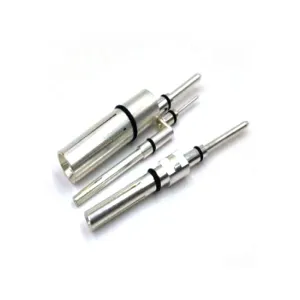
Industrial-Grade PCB Pin Header Connector
Category: Diverse Socket&PinsBrowse number: 3Number:Release time: 2025-12-30 09:52:05The Industrial-Grade PCB Pin Header Connector is a widely used interconnection component designed to establish stable electrical interfaces between printed circuit boards or between a PCB and external electronic modules. As a core element in many electronic assemblies, pin headers play a crucial role in ensuring reliable signal transmission, power delivery, and mechanical alignment.
News
Category:
-
[industry news]Mechanical Fatigue and Contact Failure of Board-to-Board Con...
2025-12-30 10:51:08
Case
Category:
No search results found!
Video
Category:
No search results found!
Download
Category:
No search results found!
Job
Category:
No search results found!
Featured Products
No search results found!



 Phone
Phone