

board stacking connectors
Board Stacking Connectors: Design, Applications, and Considerations Board stacking connectors are essential components in modern electronics, enabling the vertical interconnection of multiple printed circuit boards (PCBs) in a compact and efficient manner. These connectors facilitate high-density signal, power, and ground connections between stacked boards, making them ideal for space-constrained applications such as embedded systems, telecommunications, industrial automation, and consumer electronics. Design and Types Board stacking connectors come in various configurations to meet different design requirements: - Pin Headers and Sockets: Commonly used for low-to-medium density applications, these connectors consist of male pins and female receptacles, providing a simple and cost-effective solution. - Mezzanine Connectors: Designed for high-speed signal transmission, these connectors offer fine-pitch contacts and robust shielding to minimize crosstalk and electromagnetic interference (EMI). - Board-to-Board (BTB) Connectors: These compact connectors support high-density interconnections with low-profile designs, often used in mobile devices and wearables. - Power Stacking Connectors: Specialized for high-current applications, these connectors ensure reliable power delivery between stacked boards. Key design considerations include pitch size (ranging from 0.4mm to 2.54mm), mating height, current rating, and signal integrity. Materials such as high-temperature plastics and gold-plated contacts enhance durability and conductivity. Applications Stacking connectors are widely used in: - Embedded Computing: Stacked PCBs in single-board computers (SBCs) and system-on-module (SoM) designs. - Telecommunications: High-speed data transmission in networking equipment. - Industrial Systems: Modular control systems requiring reliable interconnections. - Consumer Electronics: Smartphones, tablets, and wearables where space optimization is critical. Key Considerations When selecting board stacking connectors, engineers must evaluate: - Mechanical Stability: Ensuring secure mating and resistance to vibration. - Signal Integrity: Minimizing impedance mismatches and signal loss. - Thermal Management: Managing heat dissipation in high-power applications. - Ease of Assembly: Compatibility with automated PCB assembly processes. Conclusion Board stacking connectors play a crucial role in enabling compact, high-performance electronic systems. Their versatility in design and application makes them indispensable in industries where space efficiency and reliable interconnections are paramount. As technology advances, these connectors continue to evolve, supporting higher speeds, greater densities, and improved durability.
Products
Category:
-
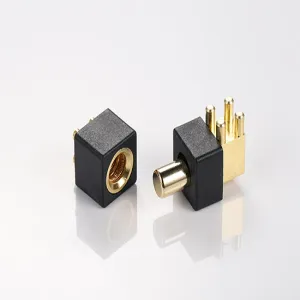
PrecisionStack Board-to-Board Connector Series
Category: Board-to-Board ConnectorsBrowse number: 2Number:Release time: 2025-12-29 15:02:20The PrecisionStack Series represents a comprehensive approach to board-to-board connectivity, engineered to deliver consistent performance across various stacking configurations and environmental conditions. Unlike single-purpose connectors, this series provides a versatile platform supporting multiple pitch options, current ratings, and mechanical configurations within a unified design framework.
News
Category:
-
[Company News]Design Guidelines for Using M12 Connectors in Industrial Aut...
2025-12-30 08:55:38 -
[Company News]How Proper Assembly Improves the Long-Term Performance of FA...
2026-01-01 09:13:50 -
[industry news]Push-Pull Connectors Explained: Locking Mechanism and Perfor...
2026-01-01 09:14:33
Case
Category:

Video
Category:
No search results found!
Download
Category:
No search results found!
Job
Category:
No search results found!
Featured Products
No search results found!



 Phone
Phone