

board to board connectors
Board-to-Board Connectors: Overview and Applications Board-to-board (BTB) connectors are essential components in modern electronics, enabling direct electrical connections between printed circuit boards (PCBs) without the need for cables. These connectors are widely used in consumer electronics, industrial equipment, automotive systems, and telecommunications devices due to their compact design, reliability, and versatility. Types of Board-to-Board Connectors 1. Mezzanine Connectors – These connectors stack PCBs parallel to each other, providing a high-density connection in a compact space. They are commonly used in memory modules, embedded systems, and compact devices. 2. Stacking Connectors – Similar to mezzanine connectors but designed for vertical stacking, allowing PCBs to be mounted one above the other. This configuration is useful in space-constrained applications like wearables and IoT devices. 3. Cantilever Connectors – These connectors use a flexible or rigid design to bridge PCBs at an angle, often found in industrial control systems and automotive electronics. 4. Backplane Connectors – Used in high-speed applications such as servers and networking equipment, these connectors support multiple PCB connections in a single system. 5. Floating Connectors – Designed to accommodate slight misalignments between PCBs, these connectors improve reliability in applications subject to vibration or thermal expansion. Key Features and Considerations - Pitch Size – The spacing between contacts, typically ranging from 0.4mm to 2.54mm. Smaller pitches allow higher density but require precise manufacturing. - Current Rating – Determines the power-handling capability, with some connectors supporting high currents for industrial applications. - Mating Cycles – The number of times a connector can be engaged and disengaged before performance degrades. - Signal Integrity – High-speed connectors minimize crosstalk and impedance mismatches for reliable data transmission. - Durability – Connectors with robust housings and gold-plated contacts ensure long-term reliability in harsh environments. Applications - Consumer Electronics – Smartphones, tablets, and laptops use BTB connectors for compact, high-speed interconnects. - Automotive Systems – Advanced driver-assistance systems (ADAS) and infotainment rely on rugged BTB connectors. - Industrial Automation – Factory control systems and robotics use high-reliability connectors for signal and power transmission. - Medical Devices – Miniaturized connectors are critical in portable medical equipment and implantable devices. Conclusion Board-to-board connectors are fundamental in enabling efficient, high-density PCB interconnections. Their diverse configurations and performance characteristics make them suitable for a wide range of industries, ensuring reliable connectivity in increasingly miniaturized and complex electronic systems. Advances in materials and design continue to enhance their performance, meeting the demands of next-generation applications.
Products
Category:
Canted Coil Spring
-
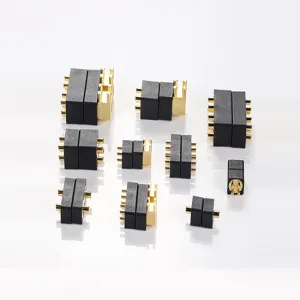
Board-to-Board Connectors for Reliable PCB Interconnection
Category: Board-to-Board ConnectorsBrowse number: 26Number:Release time: 2025-12-24 14:14:29Board-to-Board Connectors are essential components used to create stable and compact electrical connections between printed circuit boards (PCBs). As electronic devices continue to move toward higher integration, smaller form factors, and higher signal density, board-to-board interconnection has become a critical part of overall system design.
News
Category:
-
[Company News]Signal Stability and Jitter Challenges of Spring-Loaded Cont...
2025-12-30 10:55:25 -
[Company News]Design Considerations for Push-Pull Connectors in Medical Eq...
2026-01-01 09:13:04 -
[industry news]Board-to-Board Connectors Explained: Basics, Types and Appli...
2026-01-03 08:59:51
Case
Category:

Video
Category:
No search results found!
Download
Category:
No search results found!
Job
Category:
No search results found!
Featured Products
-
NEWS
Board-to-Board Connectors for Reliable PCB Interconnection
Learn more



 Phone
Phone