

pin header for electronics
Pin Headers in Electronics: A Comprehensive Overview Pin headers are fundamental components in electronics, widely used for creating temporary or permanent connections between PCBs (Printed Circuit Boards), modules, and other devices. These small, versatile connectors consist of one or more rows of metal pins, typically made of brass or phosphor bronze, often plated with gold or tin for improved conductivity and corrosion resistance. Types of Pin Headers Pin headers come in various configurations to suit different applications: 1. Single-Row and Dual-Row Headers – Single-row headers have pins arranged linearly, while dual-row headers feature two parallel rows, commonly used in higher-density connections. 2. Male and Female Headers – Male headers (pins) plug into female headers (sockets), forming a secure connection. 3. Right-Angle and Straight Headers – Right-angle headers allow horizontal PCB mounting, saving space, whereas straight headers are vertically mounted. 4. SMT (Surface-Mount) and THT (Through-Hole) – SMT headers are soldered directly onto PCB pads, while THT headers pass through holes for stronger mechanical bonds. Key Applications - Prototyping & Breadboarding – Pin headers enable quick connections for testing circuits without permanent soldering. - Modular Electronics – Development boards (e.g., Arduino, Raspberry Pi) use pin headers to interface with sensors, shields, and expansion modules. - Internal PCB Connections – They link daughterboards, displays, and peripherals within devices like laptops and industrial equipment. - Jumper Wires & Dupont Cables – Female-to-female or male-to-female jumper wires often connect to pin headers for flexible wiring. Advantages - Reusability – Unlike soldered wires, pin headers allow repeated connections and disconnections. - Space Efficiency – Compact designs suit high-density PCB layouts. - Cost-Effectiveness – Mass-produced and widely available at low cost. - Standardization – Common pitch sizes (e.g., 2.54mm, 1.27mm) ensure compatibility across devices. Considerations for Selection - Pitch (Pin Spacing) – Must match the mating connector (e.g., 2.54mm for most hobbyist boards). - Current Rating & Material – Thicker pins handle higher currents; gold plating improves durability. - Mechanical Stability – THT headers offer better strength than SMT for high-vibration environments. Conclusion Pin headers are indispensable in electronics due to their simplicity, reliability, and adaptability. Whether for prototyping, modular systems, or internal PCB interconnects, they provide an efficient solution for secure electrical connections. Understanding their types and applications helps engineers and hobbyists optimize circuit designs effectively.
Products
Category:
Diverse Socket&Pins
-
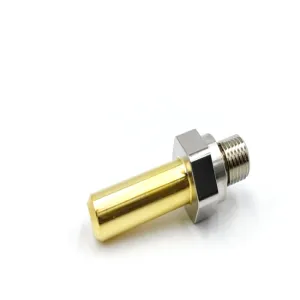
Precision PCB Pin Header Connector
Category: Diverse Socket&PinsBrowse number: 4Number:Release time: 2025-12-30 09:32:21The Precision PCB Pin Header Connector is a fundamental yet critical component used to establish reliable electrical connections between printed circuit boards or between a PCB and peripheral modules. Commonly referred to as a “pin header,” this connector provides a structured and stable interface for signal transmission, power distribution, and modular circuit expansion.
News
Category:
-
[industry news]Ergonomic and Lifecycle Considerations of Push-Pull Connecto...
2025-12-30 10:30:50
Case
Category:
No search results found!
Video
Category:
No search results found!
Download
Category:
No search results found!
Job
Category:
No search results found!
Featured Products
No search results found!



 Phone
Phone