

push-pull connector design
Push-Pull Connector Design: A Comprehensive Overview Push-pull connectors are widely used in various industries due to their secure, quick-connect, and easy-to-use design. These connectors are engineered to ensure reliable mating and unmating with minimal effort, making them ideal for applications where frequent connections and disconnections are required, such as medical devices, industrial equipment, and consumer electronics. Key Features of Push-Pull Connectors 1. Secure Locking Mechanism The defining characteristic of push-pull connectors is their self-latching mechanism. Users simply push the connector into the receptacle to engage the locking system, and a slight pull releases it. This eliminates the need for additional screws, latches, or rotational locking, reducing wear and tear while ensuring a stable connection. 2. Ergonomic and User-Friendly The design prioritizes ease of use, allowing for one-handed operation even in tight spaces. The tactile feedback from the locking mechanism ensures that users can confirm a secure connection without visual confirmation, which is crucial in critical applications like medical or military equipment. 3. High Reliability and Durability Push-pull connectors are built to withstand harsh environments, including vibrations, shocks, and moisture. Many variants feature IP-rated sealing for dust and water resistance, making them suitable for outdoor or industrial use. The materials used—such as rugged plastics, stainless steel, or high-grade alloys—enhance longevity. 4. Versatile Configurations These connectors are available in various sizes, pin counts, and signal/power combinations. Some support hybrid functions, combining power, data, and even fluid or gas transmission in a single unit. Customizable options allow for tailored solutions in specialized applications. 5. EMI/RFI Shielding For sensitive electronic applications, push-pull connectors often incorporate shielding to minimize electromagnetic or radio frequency interference, ensuring signal integrity. Applications Push-pull connectors are used in: - Medical Devices (patient monitors, surgical tools) - Industrial Automation (sensors, robotics) - Aerospace & Defense (avionics, communication systems) - Consumer Electronics (audio/video equipment, charging ports) Conclusion The push-pull connector’s intuitive operation, robust construction, and adaptability make it a preferred choice across industries. Its design balances convenience with performance, ensuring reliable connections in demanding environments. Future advancements may focus on miniaturization, higher data rates, and enhanced environmental resistance to meet evolving technological needs.
Products
Category:
Board-to-Board Connectors
-
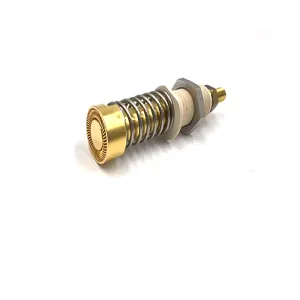
High Current Test Probe 203A Series
Category: High Current ProbeBrowse number: 5Number:Release time: 2026-01-08 16:47:12The butt contact can flexibly track the uneven surface of a contact point and enables a long-lasting and stable electrical connection. In shipping inspection, using a butt contact helps to simplify work (time reduction) and facilitates design automation. Globetech can inspect and propose a press type butt contact (press type) based on the electrodes’ shapes on the equipment side.
News
Category:
-
[industry news]Design Considerations for Push-Pull Connectors in Medical Eq...
2025-12-29 18:31:29
Case
Category:

Video
Category:
No search results found!
Download
Category:
No search results found!
Job
Category:
No search results found!
Featured Products
No search results found!



 Phone
Phone