

push-pull connectors
Push-Pull Connectors: A Comprehensive Overview Push-pull connectors are a specialized type of electrical or optical connector designed for quick and secure mating and unmating. Their unique mechanism allows users to connect and disconnect them with a simple push or pull action, eliminating the need for additional locking mechanisms like screws or latches. These connectors are widely used in industries where reliability, speed, and ease of use are critical, such as medical devices, industrial automation, aerospace, and telecommunications. Key Features and Design Push-pull connectors are characterized by their self-locking mechanism, which ensures a secure connection while allowing effortless disengagement when needed. The design typically includes: 1. Ergonomic Operation – The connectors can be mated by pushing them together and disconnected by pulling on the connector housing. This one-handed operation is particularly useful in applications where frequent connections and disconnections are required. 2. Secure Locking – Despite the ease of use, push-pull connectors provide a robust locking mechanism that prevents accidental disconnection due to vibrations, movement, or cable tension. Some variants use a twist-lock or bayonet-style retention for added security. 3. Compact and Lightweight – Many push-pull connectors are designed to be space-efficient, making them ideal for portable devices or applications with limited space. 4. High Durability – They are often built to withstand harsh environments, featuring resistance to dust, moisture, and mechanical stress. Some models are also shielded against electromagnetic interference (EMI). 5. Versatile Configurations – Push-pull connectors are available in various sizes, pin counts, and signal types (e.g., power, data, or hybrid signals). Some support high-speed data transmission, while others are optimized for high-current power delivery. Applications Push-pull connectors are favored in industries where quick, reliable connections are essential: - Medical Equipment – Used in diagnostic devices, surgical tools, and patient monitoring systems where hygiene and rapid disconnection are critical. - Industrial Automation – Deployed in robotics, sensors, and control systems where vibration resistance and easy maintenance are required. - Aerospace and Defense – Utilized in avionics and communication systems due to their reliability in extreme conditions. - Telecommunications – Found in fiber optic and RF applications where secure, high-speed connections are necessary. Advantages Over Traditional Connectors Compared to screw-type or latch-based connectors, push-pull connectors offer: - Faster mating and unmating cycles. - Reduced risk of cross-threading or improper locking. - Improved user experience in high-frequency connection scenarios. Conclusion Push-pull connectors combine convenience, reliability, and durability, making them a preferred choice in demanding applications. Their intuitive operation and robust performance ensure seamless connectivity in critical environments, contributing to efficiency and safety across multiple industries.
Products
Category:
M series Connector
-
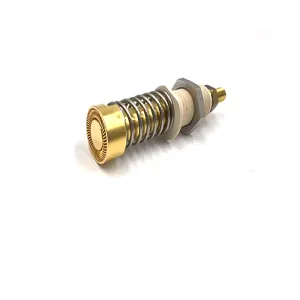
High Current Test Probe 203A Series
Category: High Current ProbeBrowse number: 5Number:Release time: 2026-01-08 16:47:12The butt contact can flexibly track the uneven surface of a contact point and enables a long-lasting and stable electrical connection. In shipping inspection, using a butt contact helps to simplify work (time reduction) and facilitates design automation. Globetech can inspect and propose a press type butt contact (press type) based on the electrodes’ shapes on the equipment side.
News
Category:
-
[industry news]Design Considerations for Push-Pull Connectors in Medical Eq...
2025-12-29 18:31:29 -
[Company News]Impedance Consistency of RF / FAKRA Connectors in Wideband R...
2025-12-30 11:06:43
Case
Category:

Video
Category:
No search results found!
Download
Category:
No search results found!
Job
Category:
No search results found!
Featured Products
No search results found!



 Phone
Phone