

PCB Interconnect Architecture
PCB Interconnect Architecture Printed Circuit Board (PCB) interconnect architecture refers to the design and arrangement of electrical connections that enable signal and power transmission between components on a PCB. It plays a critical role in determining the performance, reliability, and manufacturability of electronic systems. As modern electronics demand higher speeds, greater integration, and miniaturization, interconnect architecture must address challenges such as signal integrity, power delivery, thermal management, and electromagnetic compatibility (EMC). Key Elements of PCB Interconnect Architecture 1. Layer Stackup Design The layer stackup defines the arrangement of conductive and insulating layers in a PCB. High-speed designs often use multiple signal, power, and ground layers to minimize crosstalk and impedance mismatches. Controlled impedance traces, microstrip or stripline configurations, and proper dielectric materials ensure signal integrity. 2. Signal Routing Strategies High-frequency signals require careful routing to avoid reflections, attenuation, and electromagnetic interference (EMI). Differential pairs, length matching, and controlled impedance routing are essential for high-speed interfaces like PCIe, DDR, and USB. 3. Power Distribution Network (PDN) A robust PDN ensures stable voltage delivery to all components. Decoupling capacitors, low-impedance power planes, and optimized via placement minimize voltage drops and noise. Power integrity analysis is crucial for high-current applications. 4. Via Structures Vias provide vertical interconnections between layers. Through-hole, blind, and buried vias are used based on density and performance requirements. Advanced designs employ microvias and stacked vias for high-density interconnects (HDI) in compact PCBs. 5. Thermal Management High-power components generate heat, requiring thermal vias, copper pours, and heat sinks to dissipate energy efficiently. Proper thermal design prevents overheating and ensures long-term reliability. 6. EMI/EMC Considerations Shielding, ground planes, and proper component placement reduce electromagnetic emissions and susceptibility. Signal isolation and filtering techniques enhance EMC compliance. Challenges and Trends - Miniaturization: HDI and flexible PCBs enable smaller, lighter designs. - High-Speed Signals: Faster data rates demand advanced materials and simulation tools. - 3D Integration: Embedded components and multi-chip modules (MCMs) improve performance. - Manufacturability: Design for Manufacturing (DFM) ensures cost-effective production. Conclusion PCB interconnect architecture is a multidisciplinary field that balances electrical performance, mechanical constraints, and manufacturability. As technology advances, innovative interconnect solutions will continue to drive the evolution of electronic systems.
Products
Category:
-
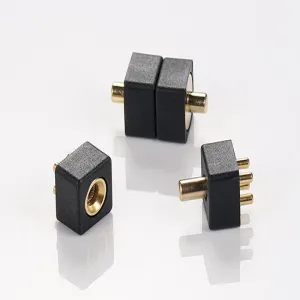
High-Density Board-to-Board Connector System
Category: Board-to-Board ConnectorsBrowse number: 3Number:Release time: 2025-12-29 11:34:40The Board-to-Board Connector System from YFS Technology is a precision interconnect solution engineered for reliable PCB-to-PCB connections within modern electronic devices. As devices trend toward miniaturization and higher functional integration, traditional soldered connections and standard connectors often fail to meet demands for high-density layouts, high-frequency signal transmission, and reliability in demanding environments.
News
Category:
-
[Company News]Maintenance and Misoperation Risks of Power Connectors in In...
2025-12-30 10:39:15 -
[Company News]Environmental Sealing Performance of M12 Connectors in Harsh...
2026-01-01 09:12:23 -
[Company News]Production and Inspection Process of Spring-Loaded Contacts
2026-01-02 09:04:33 -
[Company News]Mechanical Alignment Challenges in Board-to-Board Connector...
2026-01-04 09:11:14
Case
Category:

Video
Category:
No search results found!
Download
Category:
No search results found!
Job
Category:
No search results found!
Featured Products
No search results found!



 Phone
Phone